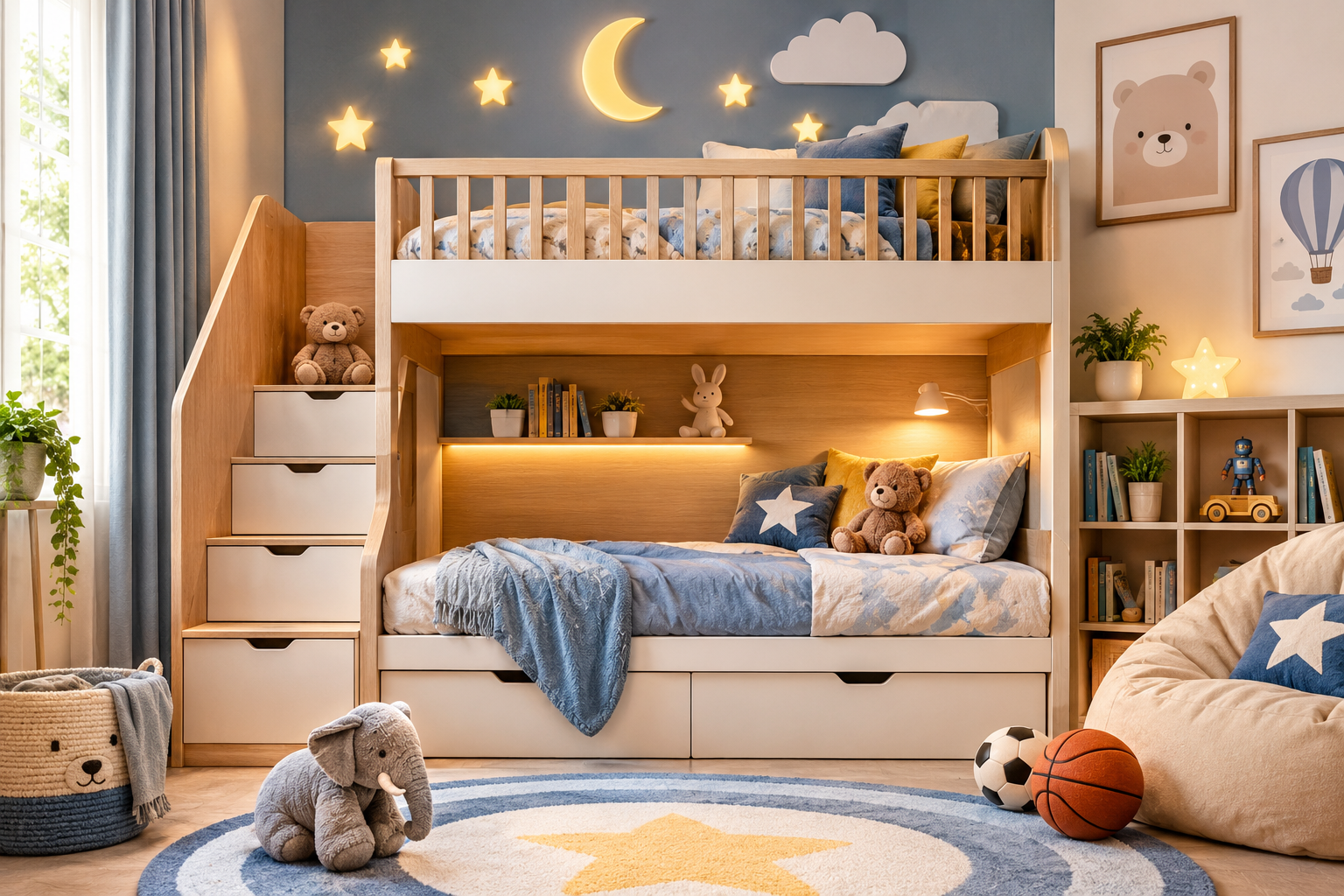
Bunk beds are no longer just a practical solution for accommodating two children in one room. Modern designs combine functionality, comfort, safety, and style, making them an important part of contemporary kids’ bedroom interiors. Interior designers are increasingly recommending innovative bunk bed styles that make better use of available space while creating a fun and inviting environment for children. If you are looking at the latest Bunk Bed Trends in Vizag, there are plenty of designs that can complement both compact apartments and spacious homes.
Why Are Bunk Beds Becoming Popular in Modern Kids’ Rooms?
One of the biggest advantages of bunk beds is their ability to maximize floor space. Instead of placing two separate beds side by side, a bunk bed uses vertical space and leaves more room for wardrobes, study desks, play areas, or storage.
Interior designers also appreciate the flexibility of modern bunk beds. They can be customized according to the room's size, children's ages, storage requirements, and overall interior theme.
Today, bunk beds are available in wooden, metal, modular, and multifunctional designs. Many models also feature built-in drawers, shelves, desks, ladders, and safety rails, making them more practical for everyday use.
1. Minimalist Wooden Bunk Beds
Minimalist wooden bunk beds are among the most popular choices for modern children's bedrooms. Their simple construction and natural appearance work well with different interior styles.
Light-colored wood can make a small room appear brighter and more spacious, while darker finishes can create a warm and sophisticated appearance. Designers often recommend clean lines, simple railings, and minimal decorative details for a timeless look.
Wooden bunk beds can also provide a sturdy structure when made with quality materials. When choosing one, parents should consider the quality of the wood, construction, ladder design, mattress support, and overall stability.
2. Bunk Beds with Built-In Storage
Storage is one of the biggest challenges in children's bedrooms. Toys, books, clothes, school supplies, and other belongings can quickly make a room feel cluttered.
For this reason, bunk beds with integrated storage are becoming an important interior design trend. Designers are incorporating drawers underneath the lower bed, shelves beside the sleeping area, and cabinets around the structure.
This approach allows one piece of furniture to serve multiple purposes. A storage-equipped bunk bed can reduce the need for additional cabinets while keeping frequently used items organized.
3. Bunk Beds with Study Desks
For school-going children, combining sleeping and study areas can make a bedroom more functional. Bunk beds with built-in study desks are particularly useful when floor space is limited.
A desk can be positioned underneath the upper bunk or alongside the lower section. Shelves and small storage compartments can also be integrated into the design.
Interior designers recommend ensuring that the study area receives sufficient natural or artificial lighting. An ergonomic chair and appropriately sized desk should also be considered to create a comfortable study environment.
4. Modern Neutral Color Palettes
Bright colors can make children's rooms playful, but interior designers are increasingly choosing neutral shades for bunk beds. White, beige, natural wood, grey, and muted pastel tones can create a calmer and more adaptable bedroom.
Neutral furniture can also grow with children. Instead of replacing a brightly themed bunk bed as their preferences change, parents can update the room using bedding, rugs, curtains, artwork, and accessories.
This makes the overall interior more flexible and easier to refresh.
5. Bunk Beds with Integrated Play Areas
Children's furniture is becoming more multifunctional, and bunk beds are no exception. Some contemporary designs incorporate play spaces underneath the upper bunk.
The lower section can be transformed into a reading corner, playhouse, lounge space, or cozy hideaway. Curtains or fabric panels can be added to create a private play zone.
This trend is especially appealing for younger children because the furniture becomes more than just a place to sleep. It can become part of their everyday play and imagination.
6. Loft-Style Bunk Beds
Loft-style beds are another option recommended by designers for smaller bedrooms. Instead of having two sleeping levels, the elevated bed creates usable space underneath.
The area below can accommodate a study desk, wardrobe, bookshelf, seating area, or storage unit. This makes loft beds particularly useful for older children and teenagers who need dedicated study space.
Before choosing a loft-style design, the room's ceiling height should be carefully measured. Adequate clearance between the mattress and ceiling is important for comfort and safety.
7. Modular Bunk Bed Designs
Modular furniture provides flexibility as children grow. Some modern bunk beds can be separated into two individual beds when required.
This makes them a practical long-term investment. When siblings become older or move into separate rooms, the beds can potentially be used independently.
Interior designers often prefer modular furniture because it can adapt to changing family needs without requiring a complete bedroom redesign.
8. Scandinavian-Inspired Bunk Beds
Scandinavian-inspired interiors focus on simplicity, natural materials, functionality, and comfortable spaces. These principles translate well into children's bedrooms.
Scandinavian-style bunk beds generally feature clean shapes, light wood finishes, soft colors, and minimal detailing. Combined with natural fabrics and simple accessories, they can create a bright and peaceful bedroom.
This style is also easy to customize with colorful cushions, artwork, rugs, and children's favorite accessories.
9. Safety-Focused Bunk Bed Designs
While appearance and functionality are important, safety should always be a priority when selecting a bunk bed. Interior designers consider safety rails, ladder placement, structural stability, mattress support, and appropriate spacing when planning children's bedrooms.
The upper bunk should have properly fitted guardrails to reduce the risk of falls. The ladder should also be securely attached and easy for the child to use.
Parents should follow the manufacturer's recommended age and safety guidelines and make sure the mattress is the correct size and thickness for the bed frame.
How to Choose the Right Bunk Bed for Your Kids’ Room
The right bunk bed should suit both the room and the children using it. Start by measuring the available floor area, ceiling height, door position, windows, and existing furniture.
Next, consider how the space needs to function. If the room lacks storage, a bunk bed with drawers and shelves may be more suitable. If children need a dedicated study area, a design with a built-in desk could be more practical.
Material and construction quality should also be carefully evaluated. A well-designed bunk bed should feel stable and sturdy, with strong joints and a secure ladder.
For families comparing Bunk Bed Trends in Vizag, retailers such as Livincart can be considered when looking for furniture options that balance functionality and contemporary design.
How to Style a Bunk Bed Like an Interior Designer
The right accessories can completely change the appearance of a bunk bed. Start with coordinated bedding that complements the room's color palette. Add soft cushions, rugs, wall art, and curtains to create a cohesive theme.
For younger children, playful themes can be introduced through removable accessories rather than permanent furniture finishes. Older children may prefer a more mature color scheme with simple decorative elements.
Lighting is another important consideration. Wall-mounted reading lights can provide individual illumination without taking up valuable floor space.
Keep the surrounding area organized as well. Storage baskets, wall shelves, and under-bed drawers can help maintain a clean and functional bedroom.
Modern bunk beds have evolved into versatile furniture pieces that combine sleeping, storage, studying, and play. From minimalist wooden designs and modular beds to loft-style furniture and integrated study spaces, there are many options available for different room sizes and lifestyles.
The latest Bunk Bed Trends in Vizag show how thoughtful furniture choices can make children's bedrooms more organized without compromising on style. By considering safety, materials, functionality, room dimensions, and future needs, parents can select a bunk bed that remains useful and attractive as their children grow.
FAQs
1. Are bunk beds suitable for small bedrooms?
A) Yes. Bunk beds make use of vertical space, leaving more floor area available for study desks, storage, play areas, or other furniture.
2. What is the most popular bunk bed design?
A) Wooden, minimalist, storage-integrated, and multifunctional bunk beds are popular choices because they combine durability, functionality, and contemporary styling.
3. Are bunk beds safe for children?
A) Bunk beds can be safe when they are properly constructed and used according to the manufacturer's safety recommendations. Guardrails, secure ladders, suitable mattresses, and age guidelines are important considerations.
4. Can bunk beds include storage and study areas?
A) Yes. Many modern designs combine bunk beds with drawers, shelves, wardrobes, and study desks, making them particularly useful for compact children's bedrooms.